Table of Contents
- 1 1. Teenage Engineering OP-XY Portable Synthesizer
- 2 2. Arturia MicroFreak Stellar Hybrid Synthesizer (Limited Edition)
- 3 3. Behringer Poly-D Analog Polyphonic Synthesizer
- 4 4. Roland JUNO-D8 Synthesizer
- 5 5. Korg microKORG 2 Keyboard Synthesizer/Vocoder (Limited Edition Black)
- 6 6. Sequential Prophet-10 10-Voice Polyphonic Analog Synthesizer
- 7 7. Oberheim TEO-5
- 8 8. Novation MiniNova Mini Keys Synthesizer
- 9 9. Yamaha CK88 88-Key Portable Stage Keyboard
- 10 10. Moog Messenger Monophonic Analog Synthesizer
Synthesizers remain essential tools for musicians, producers, and performers seeking creative sound design and versatility. From portable units to professional stage models, today’s market offers instruments that cater to a wide range of styles and skill levels. Whether you’re exploring electronic textures, crafting vintage tones, or enhancing live performances, these options showcase the variety and innovation available in modern synthesizer design.
1. Teenage Engineering OP-XY Portable Synthesizer
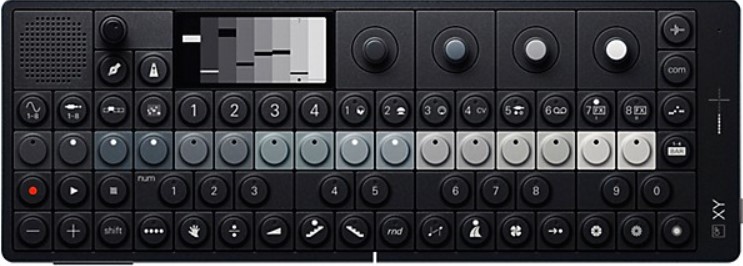
The Teenage Engineering OP-XY is a compact, battery-powered synthesizer designed for portability and creative experimentation. It features multiple synthesis modes, sampling capabilities, and a built-in sequencer, offering flexibility in sound design whether at home or on the go.
Its lightweight design, high-resolution screen, and intuitive interface make it approachable for both beginners and experienced users. Connectivity options include USB-C, MIDI, and line in/out for integration with other gear.
Pros:
- Multiple synthesis engines included
- Built-in sampler and sequencer
- Compact, highly portable design
- Intuitive user interface
- USB-C and MIDI support
Cons:
- Limited polyphony for complex layers
- Small keys not ideal for pianists
- Battery life shorter under heavy use
- Minimal onboard effects options
- Higher price for small form factor


2. Arturia MicroFreak Stellar Hybrid Synthesizer (Limited Edition)

The Arturia MicroFreak Stellar is a compact hybrid synthesizer combining digital oscillators with an analog filter. Its capacitive touch keyboard offers unique playing dynamics, and multiple oscillator modes allow a wide range of sonic textures.
This limited-edition version features a distinctive silver finish. It includes sequencing, arpeggiation, and modulation options, making it versatile for electronic musicians seeking both experimental and traditional sounds.
Pros:
-
Hybrid digital-analog sound engine
-
Wide range of oscillator types
-
Polyphonic aftertouch support
-
Built-in sequencer and arpeggiator
-
Lightweight, portable construction
Cons:
-
Touch keys lack tactile feedback
-
Small interface for deep editing
-
Limited onboard effects variety
-
No traditional pitch/mod wheels
-
External power required for use
3. Behringer Poly-D Analog Polyphonic Synthesizer
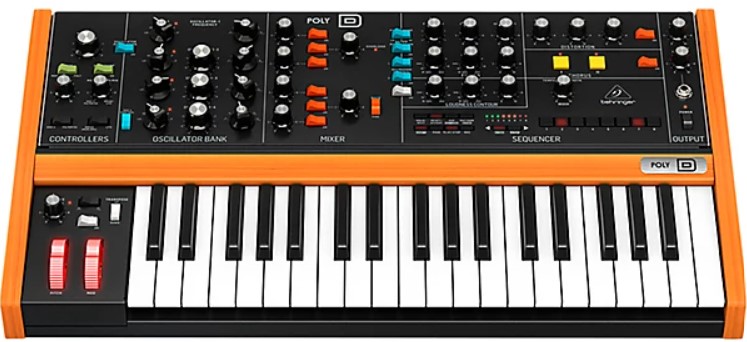
The Behringer Poly-D delivers classic analog tones with four oscillators, a 24-dB ladder filter, and polyphonic, unison, or monophonic modes. Inspired by vintage designs, it offers hands-on control for detailed sound shaping.
Additional features include a built-in distortion circuit, chorus effect, and a sequencer/arpeggiator for pattern creation. USB-MIDI and CV/Gate connections make it compatible with both modern and modular setups.
Pros:
-
Four-oscillator analog architecture
-
Ladder filter with warm character
-
Built-in chorus and distortion
-
Polyphonic and monophonic modes
-
Multiple connectivity options
Cons:
-
No patch memory storage
-
Larger size reduces portability
-
Analog tuning may drift slightly
-
Heavier than digital counterparts
-
Limited polyphony for chord work
4. Roland JUNO-D8 Synthesizer
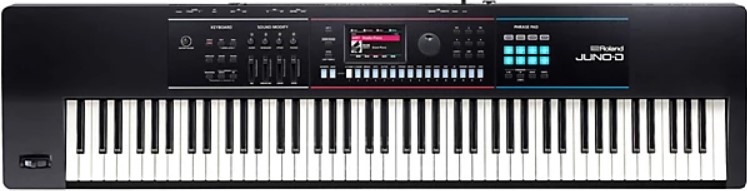
The Roland JUNO-D8 is an 88-key performance synthesizer featuring high-quality sounds suitable for stage and studio use. It offers a variety of instrument tones, including pianos, strings, and synth patches.
Its weighted action enhances playability, while onboard effects and real-time controls provide flexibility during performances. USB connectivity and MIDI support enable integration with other gear and recording environments.
Pros:
- 88-key weighted keyboard
- Broad selection of sounds
- Real-time performance controls
- Onboard effects included
- USB and MIDI connectivity
Cons:
-
Limited deep synthesis editing
-
Heavier than compact models
-
No built-in sequencer
-
Preset editing requires menu navigation
-
Limited storage for custom patches
5. Korg microKORG 2 Keyboard Synthesizer/Vocoder (Limited Edition Black)
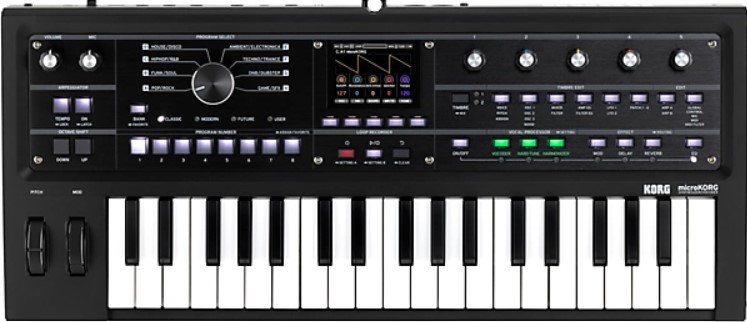
The Korg microKORG 2 is a portable synthesizer and vocoder with a compact 37-key design. It offers a range of modern and vintage sounds alongside an updated vocoder for voice-based synthesis.
Its small size and battery operation make it suitable for mobile use. The interface allows quick access to editing functions, and presets are designed for a variety of music styles.
Pros:
-
Built-in vocoder functionality
-
Compact, portable form factor
-
Wide range of preset sounds
-
Battery or AC powered
-
Simple editing interface
Cons:
-
Mini keys not ideal for all
-
Limited polyphony for complex patches
-
Basic display for parameter editing
-
Vocoder requires external mic
-
No aftertouch on keys
6. Sequential Prophet-10 10-Voice Polyphonic Analog Synthesizer

The Sequential Prophet-10 offers ten voices of pure analog sound with two VCOs per voice and a classic low-pass filter design. It is a faithful reissue of a legendary instrument, updated with modern reliability.
Its straightforward panel layout supports direct control, and the build quality is designed for professional use. MIDI and USB connections enable seamless integration with digital studios.
Pros:
- Ten-voice analog polyphony
- Classic dual VCO per voice
- High-quality build and controls
- Modern MIDI/USB integration
- Faithful recreation of vintage tone
Cons:
- Large and heavy for transport
- High cost for analog purists
- No built-in effects included
- Limited modulation options compared to modern synths
- Requires external storage for patch backups
7. Oberheim TEO-5
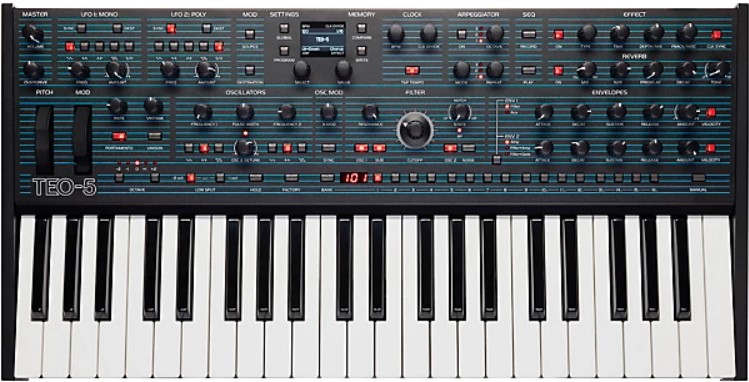
The Oberheim TEO-5 combines analog filters and oscillators with digital effects to create a versatile hybrid synthesizer. It features a 49-key keyboard and multiple sound-shaping options for modern and vintage tones.
Its interface is designed for intuitive control, making it suitable for both studio production and live performance. It offers MIDI, USB, and CV/Gate connections for flexible integration.
Pros:
- Hybrid analog-digital sound engine
- Classic Oberheim filter character
- Intuitive panel layout
- Multiple connectivity options
- Includes built-in effects
Cons:
-
Mid-size keys limit expressive range
-
No onboard sequencer
-
Fewer presets than competitors
-
Limited polyphony for complex layers
-
Price higher than similar hybrids
8. Novation MiniNova Mini Keys Synthesizer
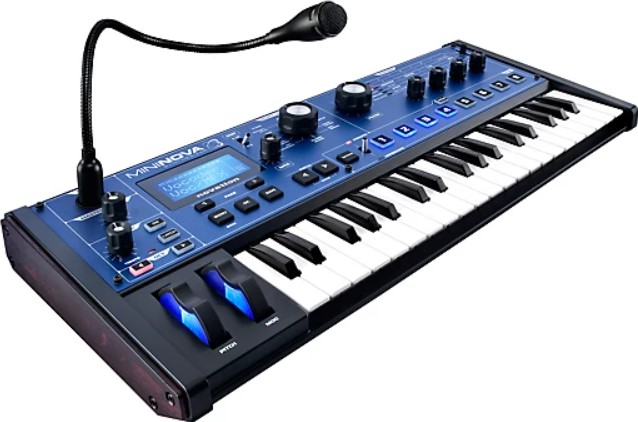
The Novation MiniNova is a compact synthesizer with a powerful sound engine derived from the UltraNova. It offers 256 onboard sounds, an 18-voice polyphony, and a built-in vocoder for vocal effects.
Its small keybed and lightweight design make it portable, while extensive modulation, filters, and effects provide deep sound creation possibilities. USB and MIDI ports enable versatile connectivity.
Pros:
-
256 onboard sounds included
-
Built-in vocoder with mic input
-
Lightweight, portable design
-
18-voice polyphony
-
USB and MIDI connectivity
Cons:
-
Small keys not for all players
-
Menu-driven editing can be slow
-
Limited real-time control knobs
-
No battery power option
-
Plastic build less rugged
9. Yamaha CK88 88-Key Portable Stage Keyboard
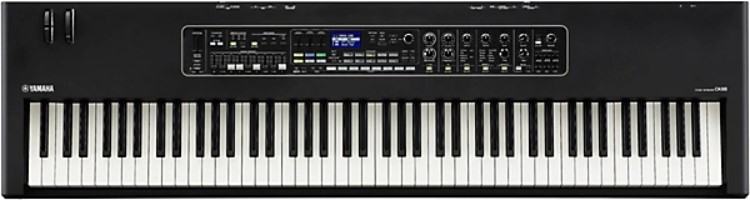
The Yamaha CK88 is a portable stage keyboard combining electric piano, organ, and synth sounds. It features an 88-key Graded Hammer Standard action for an authentic piano feel.
Onboard effects, split/layer capabilities, and intuitive controls make it performance-ready. Battery or AC power options enhance mobility, and USB audio/MIDI provide studio integration.
Pros:
-
88-key graded hammer action
-
Wide range of instrument sounds
-
Onboard effects and layering
-
Battery or AC powered
-
USB audio/MIDI integration
Cons:
-
Heavier than smaller stage pianos
-
Limited deep synth programming
-
Fewer synth-specific controls
-
Larger footprint for transport
-
No aftertouch support
10. Moog Messenger Monophonic Analog Synthesizer

The Moog Messenger is a monophonic analog synthesizer delivering classic Moog tone in a streamlined format. It features a single oscillator, Moog ladder filter, and a simple control panel for direct sound shaping.
Its compact design makes it suitable for live performance and travel, while MIDI integration allows pairing with other instruments and sequencers.
Pros:
-
Classic Moog ladder filter
-
Compact, portable form factor
-
Simple, intuitive interface
-
MIDI integration capability
-
High-quality analog ton
Cons:
-
Monophonic voice limit
-
No built-in effects
-
Limited modulation sources
-
Lacks onboard sequencing
-
Minimal preset storage
 Advertisement