
Table of Contents
Antibiotics play a crucial role in treating bacterial infections in dogs, from skin issues to digestive problems. They must be used under a veterinarian’s guidance to ensure safety and reduce antibiotic resistance. Understanding common antibiotics helps dog owners make informed decisions and follow treatments properly.
1. Doxycycline (Generic) 100 mg Tablets
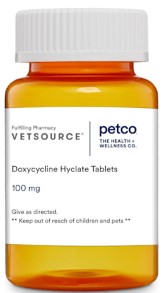
Doxycycline is a broad-spectrum antibiotic frequently prescribed for dogs to treat various bacterial infections, including those transmitted by ticks such as Lyme disease, ehrlichiosis, and Rocky Mountain spotted fever.
It is also utilized for respiratory tract infections, urinary tract infections, and certain skin conditions. Doxycycline is typically administered orally and may be given with food to reduce gastrointestinal side effects.
Pros:
-
Effective against a wide range of bacterial infections
-
Commonly used for tick-borne diseases
-
Oral administration is straightforward
-
Can be given with food to minimize side effects
-
Available in generic form, which may be cost-effective
Cons:
-
May cause nausea or vomiting in some dogs
-
Should not be used in pregnant or young animals
-
Requires a full course to prevent resistance
-
Potential for esophageal irritation if not followed by water
-
Not effective against viral infections
Price: $21.11 

2. Amoxi Drop (Amoxicillin) Oral Suspension 30ML
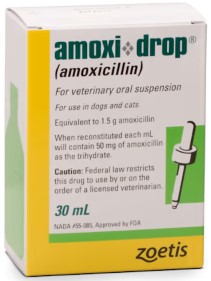
Amoxicillin is a penicillin-class antibiotic commonly used to treat a variety of bacterial infections in dogs, including those affecting the skin, respiratory tract, and urinary system.
The oral suspension form is particularly useful for administering to dogs that have difficulty swallowing pills, allowing for precise dosing based on the veterinarian’s instructions.
Pros:
- Broad-spectrum antibiotic effective against various infections
- Liquid form facilitates administration to dogs
- Generally well-tolerated by most dogs
- Suitable for treating skin, respiratory, and urinary infections
- Can be administered with food
Cons:
- Not effective against infections caused by resistant bacteria
- May cause allergic reactions in penicillin-sensitive dogs
- Requires multiple daily doses
- Must be refrigerated after opening
- Full course must be completed to prevent resistance
Price: $19.06
3. Clindamycin (Generic) 150 mg Capsules
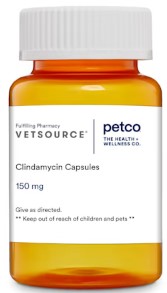
Clindamycin is an antibiotic used to treat various bacterial infections in dogs, particularly those involving the skin, bones, and dental areas. It is effective against anaerobic bacteria and is often prescribed for deep tissue infections.
This medication is administered orally and is available in capsule form, allowing for dosing based on the dog’s weight and the severity of the infection.
Pros:
-
Effective against anaerobic bacterial infections
-
Commonly used for dental and bone infections
-
Oral capsules allow for precise dosing
-
Can be administered with or without food
-
Generally well-absorbed in the gastrointestinal tract
Cons:
-
May cause gastrointestinal upset in some dogs
-
Not suitable for dogs with liver or kidney issues without veterinary supervision
-
Potential for antibiotic-associated diarrhea
-
Requires a prescription and veterinary oversight
-
Not effective against gram-negative bacteria
Price: $11.40
4. Simplicef (Cefpodoxime Proxetil) 100 mg Tablets
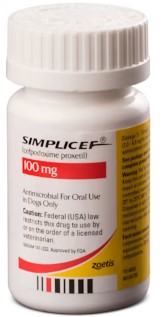
Simplicef is a cephalosporin-class antibiotic used to treat skin infections in dogs caused by susceptible strains of bacteria. It is effective against a range of bacterial pathogens and is administered once daily, which may improve compliance.
The tablet form allows for easy administration, and the medication is generally well-tolerated by dogs.
Pros:
-
Effective against common skin infections
-
Once-daily dosing enhances compliance
-
Oral tablets are easy to administer
-
Generally well-tolerated with minimal side effects
-
Suitable for long-term use under veterinary supervision
Cons:
-
Not effective against all types of bacteria
-
May cause vomiting or diarrhea in some dogs
-
Requires a prescription and veterinary guidance
-
Should not be used in dogs with known allergies to cephalosporins
-
More expensive compared to some other antibiotics
Price: $71.74
5. Baytril (Enrofloxacin) 22.7 mg
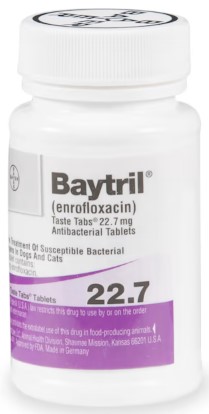
Baytril is a fluoroquinolone antibiotic used to treat a variety of bacterial infections in dogs, including those affecting the urinary tract, respiratory system, and skin.
The taste-tab formulation is designed to be palatable, facilitating administration. It is typically administered once daily, and its broad-spectrum activity makes it a versatile option for treating infections.
Pros:
-
Broad-spectrum antibiotic effective against various infections
-
Palatable taste-tabs enhance ease of administration
-
Once-daily dosing improves compliance
-
Effective for urinary, respiratory, and skin infections
-
Rapid onset of action
Cons:
-
Not suitable for young, growing dogs due to potential joint issues
-
May cause gastrointestinal upset
-
Requires veterinary prescription and supervision
-
Potential for development of bacterial resistance
-
Should not be used in dogs with known hypersensitivity to fluoroquinolones
Price: $34.59
 Advertisement